Category Archives: Energyhealing

Physical architecture for instant meditation

This video delves into a fascinating and highly mechanical way of meditating and tapping into spiritual energy, as taught by Osman, the “blind Muslim yogi.” While traditional meditation often focuses on mental discipline and achieving relaxation, Osman’s teachings emphasize precise physical alignment as the key to unlocking deep meditative states.

The video starts by comparing the clear precision of medical diagnoses (like a broken bone visible on an X-ray) with the often vague and subjective experience of meditation. This vagueness can lead to high dropout rates, as beginners often feel like personal failures if they don’t immediately achieve peace or struggle with a “monkey mind.” The video points out that many assume meditation is about fighting thoughts or lacking willpower.

However, Osman’s approach completely shifts the focus to the physical body. He is shown as a master bioenergy healer with decades of experience, especially in critical care and terminal illnesses. Even though he is blind, he uses vivid spatial metaphors from his past sight to explain complex internal energy systems.

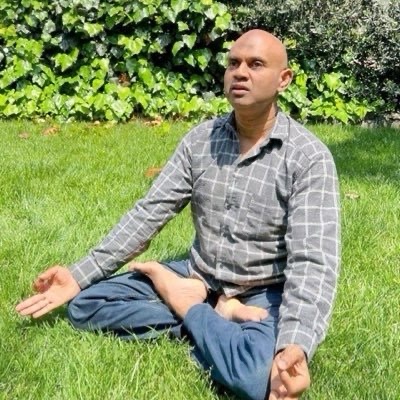
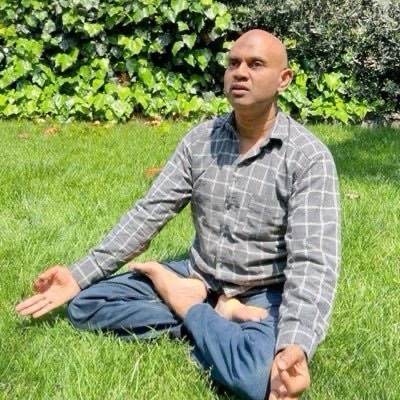
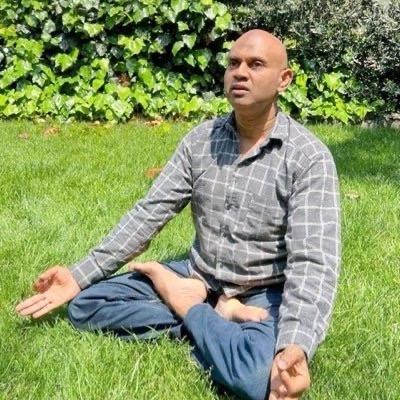
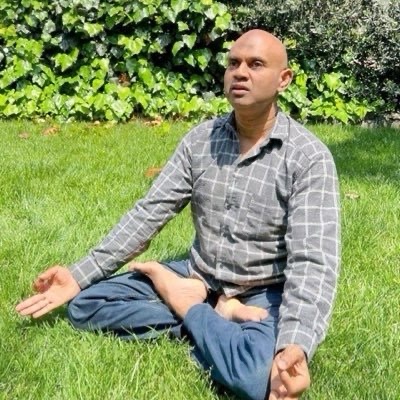
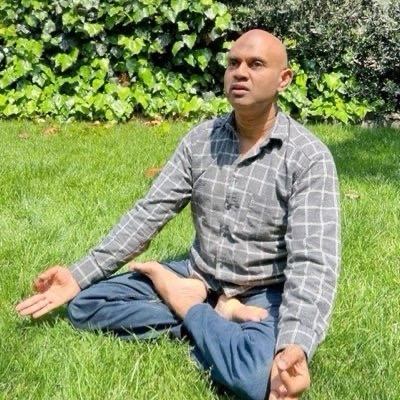
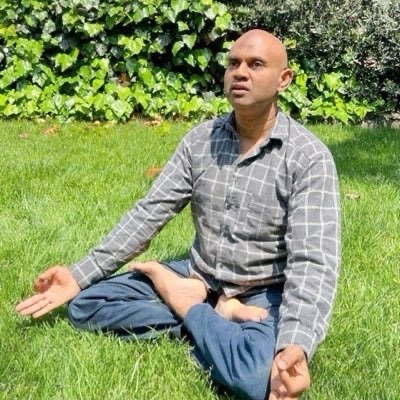
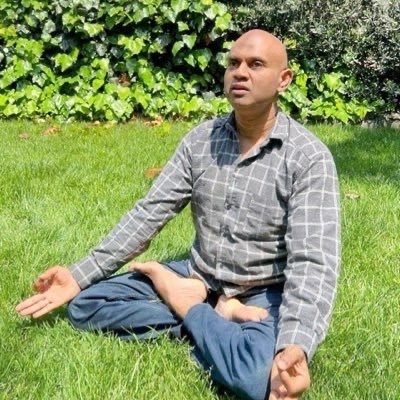
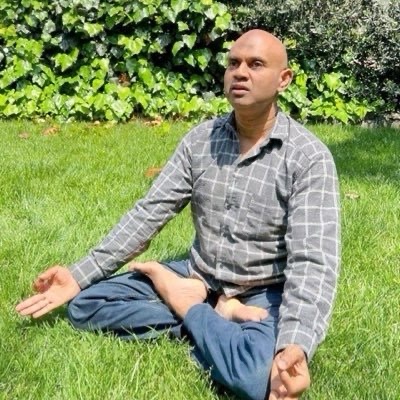
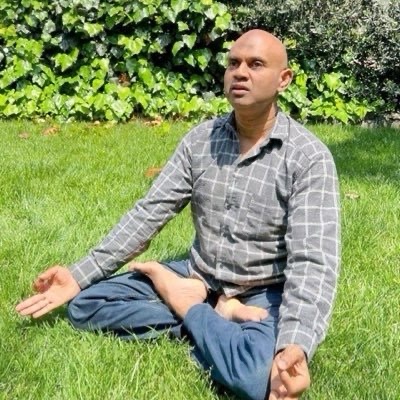
The heart of his teaching is a specific yogic posture called “Sidasana” (known as “Sedesta” in the source material). This isn’t just a casual, comfortable seat. It involves precise biomechanical alignment: sitting upright with legs extended, bending one knee, dropping it to the side, and placing the heel firmly against the perineum. This “heel prop” acts as a structural wedge, creating a stable base. A slight forward lean from the hips is also important, aligning the spine and preventing the lower back from straining.

This posture can be tough for beginners because their hip flexors and hamstrings might be tight, and it often takes years to get it right. The video uses a Formula 1 car to explain why this intense physical work is so important: just like a comfy couch is fine for short drives (basic meditation), Sidasana is what you need for high-speed, long-lasting practice (advanced states).

Sidasana’s physical structure is super important for managing a lot of energy. It’s made to handle the huge power of “kundalini” energy, which is usually seen as a sleepy force at the base of your spine. When it wakes up, it can be a bit much and make you feel shaky. Sidasana, especially how you place your heel on your perineum, helps channel this wild energy up into your spine, which is the only thing in your body that can handle that kind of power without getting overloaded.

Think of the spinal cord like a high-voltage power line. The posture helps create a “closed loop” for this energy.

Osman says that this physical lock makes developing spiritual energy “two to five times faster” because it gives energy “zero resistance” to travel. Meditation is now seen as an active, tough job of managing energy, like running a “bioelectric nuclear reactor.”

Interestingly, Osman says that getting into Sidasana is “90% of the meditation done.” This means that the usual struggle with the “monkey mind” isn’t because you’re not thinking straight, but because your body isn’t aligned properly. When your body is in the right place, it naturally creates a calm state, which then guides your mind. This fits with the idea of embodied cognition.

To really amp up this lively circuit, try incorporating specific hand movements known as “mudras,” especially the “Dhyana mudra” (where you touch your index finger to your thumb). It’s important to keep your arms open with your elbows out, not tucked in. This way, you won’t block the energy centers under your armpits, and energy can flow freely down your arms, completing the circuit. At first, these gestures might seem like “magic,” but they’re said to give your brainwaves a “turbo boost” as you become more sensitive.

The video focuses on Osman’s grounded approach, including a note that his therapies work best when used alongside traditional medical care. This is seen as important because it helps bridge the gap between mystical practices and scientific understanding.

This video explores the deep physical mechanics of meditation, as explained by Osman. It challenges the idea of meditation as just a mystical experience, instead seeing it as applied science and bio-electrical engineering. The main idea is that certain physical positions and hand movements act like “switches” that can speed up the move into deep meditative states like theta and delta.

Initially, the discussion talks about Osman’s own journey, moving from an 18-hour daily practice that took 90 minutes to reach the theta state to an almost instant shift in just 2-5 seconds by simply touching his index finger and thumb. This quick change is explained by looking at neuroplasticity and classical conditioning, where years of practice have made the neural pathways myelinated, turning the physical posture into a conditioned trigger for brainwave states.

The video then dives into the ‘electrical circuit’ analogy for the human body, suggesting that our bodies are like electrical machines, creating a measurable bioelectric field. It assigns different hand positions efficiency ratings: open, un-touching fingers are like a ‘broken circuit’ at 0% efficiency, losing energy. Interlocking fingers create a ‘closed loop’ at 50% efficiency, connecting the body’s hemispheres. The best ‘Dan mudra’ (thumb and index finger touching) makes precise microcircuits at 100% efficiency, acting like a ‘turbo boost’ for brainwave states.

The discussion also touches on other physical alignments: open armpits for unblocked lymphatic and nerve pathways, a straight spine as a ‘high-capacity insulated superconductor,’ and the stability provided by the heel propping the pelvic floor. Together, these elements turn the body into a ‘zero resistance antenna’ for subtle energy.

A big part of the video focuses on making these practices accessible to everyone, especially those with physical limitations. It challenges the idea that strict, painful postures are the only way. Osman’s approach is shown as easy to use: using a backrest is encouraged for spinal alignment without straining muscles, crossing ankles on the floor closes the lower circuit, and dealing with leg-crossing pain involves short, gradual exposure instead of enduring pain. This ‘physical therapy’ approach emphasizes slowly getting used to things over time.

Even for those who can’t move around much, the video stresses that the hand mudras are still accessible and can really change how energy flows. The main message is that meditation isn’t just for mystics; it’s an accessible practice that involves small, intentional bioelectrical connections.

Finally, the video wraps up by highlighting Osman’s generosity, offering a ‘shortcut’ based on his own years of trying things out. It reminds us of the important mechanical ideas: the spine as a superconductor, the ‘Sikasa’ posture as a way to stabilize the body, and hands as bioelectrical switches. It leaves us with a thought-provoking question: if intentional postures can create healing power, what chaotic, unintentional postures are draining our vital energy every day?

Discover how floor sitting can boost your focus!

This video dives into the surprising neurobiological advantages of ancient physical positions, especially cross-legged sitting, and how they stack up against our modern obsession with comfort. It uses the insights of Osman, a blind Muslim yogi, as a fascinating example. Osman, a highly skilled bioenergy healer with 50 years of yoga and meditation experience, initially reached deep spiritual states like samadhi while using modern furniture, thinking that ancient floor-sitting was just a way to avoid discomfort.

However, his view changed dramatically during a Ramadan gathering when he felt embarrassed by his inability to sit comfortably on the floor like everyone else. This social moment really pushed him to rethink his practice. He realized that modern conveniences, like ergonomic chairs, actually weaken our natural movement by taking away from core muscles and shortening hip flexors, which can lead to things like “gluteal amnesia.”

Osman turned his own space into a test lab, putting up with a lot of pain to get used to floor-sitting. He found that the pain in his knees and ankles when sitting cross-legged is often because his hips are tight, not because his knees are the problem. The trick was to focus on stretching the adductor tendons (inner thighs) by bringing the soles of his feet together and letting his knees relax naturally, instead of trying to push them down. This gentle, consistent stretching helped his hips rotate properly, which took the pressure off his knees.

A surprising cognitive boost came along: a whopping 90% decrease in sleepiness while meditating! This isn’t because you’re missing out on comfort, but because your brain is getting a real workout through a special feedback loop. When you sit on the floor, you’re using your core muscles and constantly adjusting your balance, which sends signals to your brain that keep you alert. That’s different from sitting on comfy furniture, which tells your body to relax and switch off your thinking.

Osman then tried out more challenging poses, like the full lotus (Padmasana), but it was too hard for him. He ended up with Siddhasana, a middle ground that involves placing your heel in your perineum and your other foot between your calf and thigh. When you do this right, especially if you’re right-handed, it creates a strong, self-supporting structure that tilts your pelvis forward, perfectly aligning your spine without any strain. This lets you sit comfortably for hours, making your body practically invisible.

The video wraps up by pointing out a cool thing: true physical freedom and mental clarity come from learning to control your body through careful, well-designed postures, not just by trying to avoid physical discomfort. Ancient techniques are shown as smart plans for boosting your nervous system by using the shape of your bones, which can help you focus better and have more energy than modern conveniences often do.

https://youtu.be/MbwxF3LnAoM?si=xkzR4NIpeYixECW_

How intoxicants drop your energy baseline

This video delves into the teachings of Osman, known as the “Blind Muslim Yogi,” who has practiced advanced yoga and meditation for 50 years. Despite being permanently blind since May 2023, he uses vivid visual language in his teachings, a remnant of his decades of normal sight. Osman also has a background as a master-level bioenergy healer specializing in critical care and terminal illnesses, utilizing “telepathic healing capabilities” based on quantum entanglement principles. He claims a 90% success rate in critical care scenarios, attributing it to a scientific process of manipulating and transferring energy, combined with patients following his protocols.

Osman’s philosophy posits that modern lifestyles deplete natural energy, leading to severe ailments like cancer. Reversing these requires rigorous energy restoration. He emphasizes that his therapies are complementary to, not replacements for, licensed medical treatment. Free resources are available on his website (yogawwellness786.com) and YouTube channel, with paid services offered via Patreon.

The discussion then shifts to the yogic model of energy, contrasting it with Western notions of meditation. Osman describes life force energy as ascending through seven chakras from a baseline (Point Z). He introduces a concept of seven descending levels below Point Z, which conventional Western wellness often omits. The goal of yoga, in this model, is to elevate consciousness upwards.

The video explores the impact of intoxicants, particularly alcohol. In the yogic energy model, alcohol acts as a “chemical and energetic dampener,” automatically lowering consciousness by one or two levels from Point Z. While the subjective experience of drinking can be pleasurable due to neurochemical effects, the objective energetic reality is a descent. This descent is evidenced by behaviors like aggression or poor decision-making, followed by regret. Osman notes that about 20% of the population can become addicted to this artificial state, leading to severe life deterioration. This explains why many yoga traditions strictly forbid intoxicants, viewing them as anchors pulling practitioners down.

A surprising revelation is Osman’s personal history: for 19-21 years, he consumed alcohol almost daily, describing himself as a “heavy party animal” capable of drinking multiple bottles of whiskey or 24 pints of beer in a short period. This extreme example is used not to advocate for drinking, but to illustrate that profound spiritual progress is possible even with significant physical chemical tolerance. Osman argues that his intense daily practice (up to 18 hours) created such a powerful “spiritual engine” that it could overcome the “downward drag” of alcohol. However, he stresses this is not applicable to the average practitioner, whose less intense practice would be overwhelmed by such substances.

An alternative perspective from teacher Essay Subramana Swami suggests that moderate daily consumption (1-2 glasses of wine or beer) is acceptable if consumed with meals, as food slows absorption and integrates the alcohol metabolically, framing it as a mild relaxant. Osman’s advice aligns with this, stating that responsible social drinking does not substantially derail progress if daily practice is consistent.

The discussion then moves to inhaled toxins, like cigarettes. While alcohol is a chemical dampener, Osman posits that smoking does not inherently halt spiritual progress from a pure consciousness perspective. However, advanced yogic practices rejuvenate the body, making it hypersensitive. This heightened sensitivity, akin to a child’s, makes the physical body extremely vulnerable to toxins. Smoking, therefore, doesn’t stop spiritual ascent but creates a “fatal vulnerability” to the smoke’s damage. The example of Ramakrishna, the guru of Swami Vivekananda, who died of throat cancer despite immense spiritual mastery, illustrates this paradox: spiritual advancement can lead to physical fragility.

This leads to a philosophical dilemma: is extreme spiritual purity, which increases physical vulnerability, a disadvantage? The video contrasts the “biohacking” mindset of hardening the body against toxins with Osman’s yogic approach of removing armor to achieve extreme sensitivity. This sensitivity allows one to perceive subtle energetic frequencies but also makes one deeply feel the “poison” of toxins. The choice is between being an “armored tank” or a “Formula 1 engine” requiring a pristine environment.

Finally, the concept of “intoxicants” is expanded to include seemingly innocuous foods like onions and garlic. When the body reaches a state of extreme, unarmored cellular sensitivity, these foods can act as potent toxins. Osman describes experiencing a systemic crash, incapacitation, and overwhelming drowsiness after consuming garlic, even overpowering caffeine. This challenges the conventional understanding of health foods and highlights the profound shift in biological perception achieved through advanced yogic practice.

This discussion delves into the profound physiological and energetic effects of various substances on human consciousness, particularly in the context of spiritual practices like meditation and yoga. It begins by explaining the compound allicin in garlic and its mild effects on an ‘armored’ individual, contrasting it with its potent impact on a highly sensitized nervous system developed through practices like meditation. The analogy of a noise-canceling microphone is used to illustrate how a sensitized system, free from ‘static’ (stress, processed foods, etc.), reacts dramatically to even mild stimuli, leading to a profound physiological response like sleep induction.

The conversation then shifts to onions, presenting a more disruptive effect. It highlights the claim that a single slice of raw onion can induce a feeling akin to being heavily intoxicated for 6-8 hours, a sensation attributed to the onion’s energetic footprint interacting with the subtle energy body, not its chemical composition (like ethanol). This effect is said to be noticeable only in individuals who have achieved advanced levels of meditation and cleared their internal ‘static’.

The implications for spiritual practice are severe: these substances, even common foods like garlic and onions, can act as ‘mind-altering substances’ that drug an advanced yogi, drug them into a stupor, and actively counter spiritual progress by lowering one’s energetic frequency. The cumulative effect of regular consumption is described as setting a ‘permanent anchor’ that hinders spiritual advancement.

A critical perspective is introduced, questioning the claims about onions and suggesting psychosomatic responses or food allergies. However, the discussion clarifies that the effects are not about chemical intoxication but about the energetic footprint interacting with a highly sensitized body. The key takeaway is that the human instrument’s ability to perceive these effects changes with practice; what is unnoticed by an ‘armored’ body becomes significant for a sensitized one.

The summary then broadens to include alcohol and smoking. Alcohol is described as a ‘dampener’ that pulls consciousness down, though its effects can be managed with moderation and in conjunction with food. Smoking, paradoxically, while initiating cellular rejuvenation and stripping away ‘armor,’ makes the physical body too sensitive to withstand its own toxicity.

Ultimately, the discussion emphasizes that the core message is not about immediate abstinence but about cultivating awareness. It encourages listeners to observe their unique physiological responses to substances, stripping away cultural narratives and noticing subtle shifts in their baseline. The concept of being the ‘biochemist of your own experience’ is introduced.

Finally, the conversation extends the concept of ‘intoxicants’ to the digital realm. It draws a parallel between the potent effects of natural substances on a sensitized yogi and the impact of ‘digital intoxicants’ like social media doom-scrolling on an ‘unarmored’ mind. The argument is made that algorithms designed to provoke outrage, comparison, and anxiety can pull individuals down energetically, potentially more profoundly than physical substances, and that this is a critical area often overlooked despite meticulous attention to diet.

Beyond the “Supermarket of the Soul”: 5 Shocking Lessons from the Blind Yogi on Mastering Reality
1. Introduction: The Existential Jam
Picture yourself in the spirituality section of a massive, brick-and-mortar bookstore. You know the scene: the soft creak of the floorboards, the smell of coffee and old books, and the tall shelves packed with gold-lettered ancient Vedic texts sitting right next to neon-lit biohacking guides. This is the  “supermarket of the soul.”  Surrounded by an overwhelming abundance of choice, most modern seekers find themselves in an  existential jam. We grab meditation apps, yoga retreats, and breathing techniques like random groceries, hoping they don’t cancel each other out, yet we remain fundamentally “stuck.“ Osman, a practitioner known as the “Man from Oz,” offers a straight ladder out of this chaos. His credibility isn’t built on the “retreat industrial complex,” but on 50 years of uninterrupted practice and the attainment of  Samadhi —the ultimate state of non-dual concentration—at just 19 years old. Most importantly, as a “Performance Architect” of the spirit, Osman has taught for 46 years without charging a single dime. This  “Zero-Cost” factor  distinguishes him from the spiritual subscription models of the West; for him, this knowledge is a biological responsibility, not a luxury commodity.
2. Takeaway #1: You Are Starving in the “Menu Phase” (Library vs. Lab)
The first level of spiritual development is “Research and Knowledge Seeking.” Osman compares many at this stage to a  numismatist —someone who collects rare spiritual coins (insights) but never spends them. This is the  “Library Phase,”  where the subject matter remains outside of you. To explain the danger, Osman uses the  Michelin-starred restaurant analogy . You can sit in the finest Italian restaurant and memorize the menu. You can describe the hand-rolled pasta and the specific region where the ricotta was sourced. But reading the menu will never nourish you. In fact, you are  starving in a Michelin-starred restaurant  because you are mistaking the description for the meal. The transition to Level 2—the  “Lab” —requires moving from “nouns” to “verbs.” It requires abandoning the safety of  “maybe.””In the library, you’re playing with ideas. You’re wondering, ‘Maybe this meditation stuff helps…’ That ‘maybe’ is a defense mechanism; it keeps you on dry land. But belief is the trigger for the lab. Believing means you have to do the push-ups until your arms shake. You can’t think your way to a stronger nervous system.”
3. Takeaway #2: The Ego Isn’t the Engine—It’s the Parking Brake
A common Western fear is that “dissolving the ego” results in becoming a blissed-out, useless guru. Osman argues the opposite: the ego is not your engine; it is a  parking brake  that creates constant  biological friction. Most people run a thousand “background programs”—mortgage worries, childhood traumas, and ego-preservation—that crush their mental processor. Reaching Level 4 (The Void) is the  Ultimate System Reboot.
⁃ Wiping the RAM:  Level 4 isn’t a state of deprivation; it is the complete wipe of the “me” programs. It is a total collapse of the illusion of separation.
⁃ The Highly Effective Return:  You do not stay in the void. You return to the “simulation” as a  Bodhisattva —someone who has zoomed up the maze, seen the exits, and brought the map back down.
⁃ Frictionless Performance:  Without the “parking brake” of the ego, you become  hyper-efficient.  You aren’t expending energy fighting inner demons, making you a more attentive parent, a sharper worker, and a more effective problem-solver. You are no longer the clothes; you are the awareness wearing them.
4. Takeaway #3: The “Strategic Lie” of Buddhist Atheism
Osman presents a provocative “Survival Hypothesis”: the atheistic, secular branding of Buddhism was a historical camouflage. In its raw Himalayan form, Buddhism is saturated with “operational magic” and fanged deities.When secular empires (Chinese and British) threatened monks with execution for practicing “sorcery,” the lineages told a  strategic lie.  They told the generals, “These fanged goddesses are just metaphors; we are harmless philosophers.” Over centuries, this  “disguise became the skin.”  The West inherited the camouflage, but lost the high-voltage technology. The Camouflage (Atheism/Secular) The Technology (Operational Magic) | —— | —— || Deities are “Psychological Archetypes.” | Deities are “User Interfaces” (UI) for energy frequencies. || Mindfulness is for “stress reduction.” | Incantations are “sonic weapons” to manipulate reality. || The goal is “Inner Peace.” | The goal is “Biological and Reality Manipulation.” |
Within this framework, deities like  Tara  are not objects of worship, but specific “software icons” used to access high-voltage frequencies of the causal realm.
5. Takeaway #4: You Are Accidentally Awakening Your Kundalini via Doomscrolling
Osman warns of a  “Unifying Diagnostic Hypothesis”  for why the modern world feels polarized, inflamed, and anxious. It is the  “Catastrophe of the Modern Vessel.“ In ancient times,  Dharana  (intense focus) was hard-won. Today, we achieve a deep trance state by staring at smartphones for hours. This signals the body’s high-voltage evolutionary battery—Kundalini—to surge upward to sustain the cognitive load. However, the modern vessel is  “rusted shut”  by sedentary lifestyles and processed foods. The central channel (Sushumna) is blocked, forcing the voltage into the side channels:
⁃ Left-Channel (Ida) Terror:  When voltage floods the  Ida, it triggers an epidemic of severe anxiety, panic attacks, and depression.
⁃ Right-Channel (Pingala) Burnout:  When it floods the  Pingala, it leads to chronic inflammation, organ failure, and systemic “meltdown.”“Modernity is trying to plug a nuclear reactor into a cheap plastic toaster. Because the central channel is rusted, the wires melt and the psyche cracks. This is why the global collective feels so inflamed; we have triggered the engine without clearing the pipes.”
6. Takeaway #5: The “Bovine Loophole” and Our Arbitrary Morality
Humanity uses labels to shield the ego from moral discomfort. Osman highlights this through the  “Tax Loophole for the Soul”  found in certain rituals. In India, the cow ( Bos taurus ) is sacred and legally protected. Yet, at the Kamakhya Temple, practitioners perform ritual sacrifices of the water buffalo ( Bubalus bubalis ). Biologically and behaviorally, these are nearly identical sentient bovines. However, by leveraging a taxonomic technicality, the practitioner can engage in violence while maintaining a self-image of “sacred compassion.”This illustrates how we draw arbitrary lines—protecting one “species” while sacrificing another—to keep our ego’s “moral ledger” clean while satisfying our primal impulses. It is the ultimate “nitpick” used to shield the self from the raw reality of its own contradictions.
7. Conclusion: The Mosquito’s Eternity
Osman leaves us with the  Mosquito Analogy : A mosquito lives its entire dramatic life in two weeks. To the mosquito, that is an eternity; to us, it is a blink. Is our 80-year life any different? If we are merely “transceivers” of consciousness, our sense of “The Real” is entirely dependent on our bandwidth. We are currently dreaming a very detailed dream. Mastery isn’t about escaping that dream, but about upgrading the  biological hardware  to see the “source code.”When you enter a state of pure flow and the “I” vanishes,  who is precisely remaining steering the ship?  If the “I” is gone, yet the performance improves, you have found the engine. Call to Action:  Stop browsing the menu and start the lab work. Osman provides a  Free 5-Minute Protocol  designed to safely clear the  Ida  and  Pingala  channels and strengthen the biological vessel. Download the software at yogawellness786.com.

What 20,000 people experienced while dying

This video delves into the process of dying, aiming to demystify it and provide comfort by examining clinical data, ancient texts, and the insights of a bioenergy healer named Osman.

**Osman’s Background and Approach:**
Osman, described as a “blind Muslim yogi,” is presented as a unique authority on the subject. Despite being blind since May 2023, his prior eyesight and extensive experience (50 years) as a master-level bioenergy healer, specializing in critical care and terminal illnesses, lend credibility to his insights. He utilizes telepathic healing with quantum principles and offers complimentary services to augment medical care, boasting a high success rate. His approach is scientific, simplifying ancient yoga and meditation practices. The video draws parallels between Osman’s quantum approach and concepts discussed on “The School of Greatness” podcast with guests like Dr. Joe Dispenza, Dr. Deepak Chopra, and Dr. Bruce Lipton, highlighting how the mind influences the body and energy at a quantum level.

**The Clinical Data: Kubler-Ross Study:**
The core of the discussion revolves around Dr. Elisabeth Kübler-Ross’s study of over 20,000 individuals who experienced clinical death and were resuscitated. This massive dataset, spanning diverse ages, cultures, and religions, revealed a consistent four-step sequence:

1. **Absence of Physical Pain:** Upon system shutdown, the pain mechanism deactivates, offering immediate relief. This is explained through the biological function of pain as an alarm system that becomes obsolete when self-preservation is impossible.
2. **Lifetime Memory Flashback:** A comprehensive, structural recall of one’s entire existence occurs.
3. **Emotional/Moral Accounting:** During the flashback, individuals experience intense guilt for wrongdoings and peace for good deeds, akin to an “interactive audit” or “AI processing a data log.”
4. **Approaching a White Light:** The sequence culminates in approaching a brilliantly bright, comforting white light, described with words like comfort, peace, and warmth.

The video references Andrew Huberman’s podcast for neuroscience explanations of these states, including psychedelics, sleep architectures, and meditation’s detachment from physical discomfort.

**Addressing Skepticism and Pediatric Evidence:**
Skepticism is addressed by questioning whether this sequence is merely a biological shutdown protocol (e.g., DMT release, endorphins, hypoxia). However, the video argues against this, citing the lucidity, structural coherence, and complex cognitive/moral evaluation involved, which contradict the state of a dying brain. To further counter the cultural conditioning argument (that people project what they expect based on movies/books), the video highlights observations of young children in pediatric hospice care. These children, before passing, physically reach out towards something unseen, suggesting an instinctual, objective perception of a comforting presence or light, untainted by cultural expectations.

**The “Mothership” Concept and Ancient Traditions:**
Osman connects these empirical findings to ancient yoga sciences and historical texts, proposing that we originate from a central source (the “mothership”) and return to it upon death. This “mothership” is equated with the white light, framing death not as an end but as a return to the source. This concept is supported by discussions on podcasts like “Buddha at the Gas Pump” with guests like Anita Moorjani and Rupert Spira, who discuss consciousness as fundamental reality and the return to a source of light.

**The Nature of the Source and Historical Anomaly:**
Osman explains that the “divine creator” or “God” is perceived as a formless, “eulgent” (shining brilliantly) light because its intensity obscures any distinct shape. This concept is echoed in texts like “Autobiography of a Yogi.” A significant historical anomaly is introduced: St. Ramalinga Swamigal (Ramolinga Swamigal) from South India, who preached concepts aligning with Abrahamic religions (linear eschatology) rather than the typical cyclical Vendanta philosophy of the region. This suggests a potential historical bridge between different spiritual traditions regarding the nature of the afterlife and the source of consciousness.

This video delves into the profound connection between ancient spiritual beliefs, modern medical findings, and the universal human experience of death and dying. It highlights the teachings of a historical South Indian saint, Swamiguel, who preached resurrection, a day of judgment, and worship of God as a formless, “eulgent white light.” The speaker notes the anomaly of these teachings mirroring Abrahamic theology developed thousands of miles away, with no historical evidence of Swamiguel’s contact with Middle Eastern texts.

This theological alignment is further connected to the clinical findings of Dr. Elisabeth Kübler-Ross, who studied 20,000 resuscitated patients, and the observed reflexes of children in pediatric hospices. The convergence of these data points—from ancient Middle East, historical South India, 1969 hospital wards, and modern pediatric units—suggests an “underlying objective architecture to reality” and a “universal truth” that humans occasionally access.

The discussion then explores potential historical explanations for Swamiguel’s seemingly isolated teachings within Indian tradition. One theory, referencing the Aryan invasion hypothesis, suggests a systematic suppression of indigenous literature, implying Swamiguel might have been reviving an older, suppressed knowledge stream rather than inventing new theology.

The practical application of this knowledge is emphasized, particularly by Osman, a master-level energy healer. He focuses on the transition of death not just to save lives, but to alleviate the immense devastation left for grieving families. Osman provides Dr. Kübler-Ross’s book to families, offering clinical data and factual evidence as solace, which he believes is more effective than platitudes in the face of grief. This evidence suggests that the deceased did not fade into oblivion but transitioned painlessly, reviewed their lives, and approached a “brilliantly white eulgent mothership.”

The video stresses that in the “era of unprecedented access to information” (specifically noting the year 2025), this knowledge is readily available, offering a “scientifically backed shield against the crushing despair that accompanies grief.” It encourages listeners to internalize the belief of a peaceful transition, reframing loss from tragedy to a peaceful departure.

Finally, the discussion revisits the concept of the “universal life review,” a hyperlucid flashback of one’s entire life, including the “moral ledger” of guilt and reward, experienced just before reaching the light. This concept serves as a challenge: knowing this review is imminent, individuals are prompted to live in a way that ensures this final flashback is a positive one.

Why 64 years of meditation failed

This video explores the concept of “wasted time” in personal development, meditation, and energy work, using the teachings of Osman, a bioenergy healer known as the “brine Muslim yogi.” The central argument is that mere repetition of a practice without progressive overload or the correct systemic stimulus leads to physiological stagnation, not growth. This is illustrated through the case of an 80-year-old woman who practiced alternate nostril breathing for 64 years with zero improvement, despite receiving a powerful initiation at age 16.

Osman’s approach emphasizes a scientific, pragmatic methodology, distinct from modern medicine but complementary to it. He argues that practices must yield tangible results within a short timeframe (the “two-week rule”). The woman’s stagnation is attributed to performing only three rounds of breathing daily, an insufficient “dose” to stimulate the autonomic nervous system and create lasting physiological changes like improved vagal tone or altered oxygen-to-carbon dioxide ratios. This minimal practice, while consistent, was merely “wear and tear disguised as growth.”

The video delves into the psychological barriers to progress, particularly the “sunk cost fallacy” and ego attachment. The woman’s refusal to alter her practice, even when advised by Osman 25 years prior, stemmed from a perceived betrayal of her original master’s legacy. This highlights how practices can become tied to identity, leading the brain to reward repetition over effectiveness.

Osman’s own background is presented as a counterpoint to the “sheltered mystic” archetype. He is a blind entrepreneur, father, and former addict who navigates modern life’s stresses. His teachings are rooted in “stress inoculation” and a pragmatic understanding of neurobiology and biochemistry, such as using a plant-based keto diet to manage neuropathy. He advocates for a “minimum effective dose” approach, distilling ancient practices into efficient, verifiable mechanics.

The video contrasts the “initiation” (the spark) with “daily mechanics” (the fuel). While an initiation can provide a powerful neurochemical surge, sustained adaptation requires systematic protocols. Osman offers a free five-minute yoga and meditation program as an example of a potent, efficient methodology. A case study of a 28-year-old man shows tangible results (improved focus, energy in the forehead region) within two weeks, naturally motivating him to increase practice time.

The core message is a call to audit one’s own life for “wasted time” in career, fitness, or therapy. It encourages questioning mentors and systems, not out of disrespect, but by demanding “receipts” of progress. The video concludes that true mastery is about precision and efficiency, not necessarily endurance or suffering, and that significant transformation can occur rapidly with the correct, highly specific protocols.

The blind Muslim Yogi rejects $40 million

This video delves into the extraordinary and seemingly contradictory life of Osman, a 57-year-old entrepreneur, bio-energy healer, and advanced yogi, known online as “The Blind Muslim Yogi.” His life story is presented as a deep dive into an “unpublished autobiographical audio recording” he made for his upcoming book. The narrative highlights three disparate spheres of his life: the cutthroat world of multi-million dollar commercial real estate in Dubai, the esoteric practices of quantum energy healing and advanced meditation (Samadhi), and a 15-year struggle with profound poverty. The speakers emphasize that these spheres, on paper, should never intersect, yet Osman’s life is a testament to bridging these extremes.

Osman’s journey is framed by his recent permanent blindness (May 2023), adding another layer to his already complex life. The recording itself was made on May 21st, 2026, the 12th birthday of his youngest daughter, who serves as his “true north” and a grounding force in his chaotic life. This daughter, living in Morocco, is his anchor, providing a sense of secure attachment and neurological safety, illustrating that even highly accomplished individuals need connection.

The narrative explores Osman’s “mechanism of meaning-making,” particularly his fascination with numbers like 111 and 786, which he sees as confirmations of his spiritual path. This is explained not as superstition, but as a pattern-recognition strategy common in highly analytical minds seeking order amidst chaos. A foundational childhood story about a spider trying eight times to build a web is presented as the bedrock of his resilience, teaching him to view failure as a mathematical probability rather than a personal failing.

This resilience was tested early when, against all odds and his own academic struggles, he secured a scholarship to medical school in South Africa. However, he quit in his first year due to a profound repulsion towards dissecting animals and human cadavers, highlighting a conflict between extrinsic societal expectations (prestige, wealth) and intrinsic spiritual alignment. He then pursued law, excelling but again quitting due to moral conflicts with defense work, and later finding public prosecution unfulfilling despite its security.

His intellectual capacity is demonstrated by his ability to ace a brutal analytical chemistry exam with 48 hours of study, yet he lacked “spiritual resonance.” This led him to resign from a secure government job just before his first daughter’s birth to pursue entrepreneurship, inspired by a successful real estate broker. This leap into self-employment plunged him into a devastating 15-year “entrepreneurial desert” of poverty, selling various items door-to-door. Paradoxically, during this period of extreme hardship, he found profound inner peace and happiness, which he attributes to the “choice” of his struggle and the stripping away of his ego through vulnerability and human connection.

He credits Tony Robbins’s cassette course with transforming his mindset, leading to a tenfold income increase within six months and a four-year period of luxury. However, seeking a larger arena, he moved to Dubai to enter commercial real estate, where he faced another brutal 9-year struggle, living on canned tuna. This volatility built an “almost superhuman emotional callousness to money,” detaching its power from his identity. He adopted a “Thomas Edison” approach, viewing failures as data collection for an “infinite game” of continuous learning and evolution.

This persistence eventually paid off, making him the number one commercial broker for five-star hotels in Dubai, earning multi-million dollar commissions. Crucially, his ability to remain undisturbed during these financial extremes is attributed to his parallel, deeply spiritual life. His spiritual journey began at age seven, with a profound interest in yoga, leading him to teach an adult class at age 12. At 19, he experienced Samadhi, a state of profound nondual consciousness, so intense it caused his nervous system to short-circuit.

His rapid spiritual growth, however, is openly admitted to have contributed to six divorces, initiated by him as he “outgrew the energetic alignments.” While acknowledging the potential for this to sound like a spiritualized defense mechanism, the speakers note his lack of blame towards his partners and his acceptance of responsibility, suggesting the variable was always him.

This video delves into the extraordinary life of Osman, a “blind muscle yogi” and bioenergy healer, highlighting his journey from a high-stress corporate executive to a spiritual master. Initially, the narrative focuses on the profound personal cost of his intense spiritual practices, which led to the dissolution of his social and relational structures, with only his daughter remaining a constant.

At 38, despite his advanced yoga practice, Osman suffered three heart attacks and was diagnosed as an insulin-dependent diabetic, a consequence of the chronic stress from his demanding career in Dubai’s commercial real estate. Doctors attributed his condition to his body being locked in a sympathetic “fight-or-flight” state due to constant psychological stress, leading to hormonal imbalances and metabolic disruption. Realizing his environment was toxic, Osman made a radical decision to leave his high-stress career. Within two weeks of removing the stressors, his health markers improved, allowing his body to enter a parasympathetic “rest and digest” state, facilitating cellular healing.

Today, at 57, Osman is free from all medications and health issues, even claiming to have healed a brain tumor using these protocols. This self-healing journey transformed him into a bioenergy healer with telepathic capabilities, which he grounds in the scientific principles of quantum entanglement. He explains that human consciousness and the bioenergetic field can be entangled, allowing him to correct a patient’s energetic blueprint (the “architectural blueprint of the body”) to influence the physical body (the “house”), achieving a reported 90% success rate, particularly in critical care and terminal illnesses. He emphasizes that his healing complements, rather than replaces, modern medicine.

A profound irony in his story is his gradual blindness, occurring despite his mastery of energy and healing. After losing sight in both eyes, his brain reallocated processing power, potentially enhancing his ability to sense energy and visualize quantum blueprints. He continues to describe things using visual language from his sighted past and maintains an extreme daily fitness routine.

Osman has condensed 50 years of yogic science into a free 5-minute yoga and meditation program accessible via his website, yogawwellness786.com. He also employs “micro moments,” using brief pauses in daily activities (like phone calls) to enter deep meditative states, demonstrating remarkable neuroplasticity.

His current mission is to disseminate his knowledge globally. Despite operating as a one-man media conglomerate, producing vast amounts of content daily (videos, podcasts, blogs), he had very few subscribers and followers at the time of recording, viewing this as merely “attempt number seven” in his journey, drawing parallels to Joe Rogan’s early struggles. He prices his books at $5 to ensure commitment without creating financial barriers. His ego is dissolved, evidenced by deleting a 30-volume manuscript that wasn’t practically helpful.

Financially, Osman struggles to pay rent, relying on a friend for support, even while a $40 million Dubai real estate deal sits on his desk. He refuses to return to the corporate world, prioritizing teaching others to breathe over personal wealth. His mission is to simplify ancient yogic and meditation sciences for societal benefit. The narrative concludes by emphasizing that success and enlightenment are non-linear, messy processes requiring courage to walk away from paths that no longer serve one’s soul, urging listeners to view their current struggles as necessary friction for building their own “masterpiece.”

Observing the Future without Modifying It

This video explores the intricate and frequently unsettling worldview of Osman, also known as “The Blind Muslim Yogi.” The discussion commences by examining the hypothetical ability to foresee the future, emphasizing the psychological burden associated with the inability to alter events. This concept of a disparity between perception and agency emerges as the central theme.

Osman, who became permanently blind in May 2023, is introduced as a master-level bioenergy healer with purported telepathic abilities. He specializes in critical care and terminal illnesses, boasting over 50 years of practice. His methodology is grounded in quantum entanglement principles and advanced yoga and meditation sciences. While a significant portion of his content is accessible on YouTube, he also offers paid services through Patreon, including consultations and exclusive videos. Notably, his premium energy healing service is exceptionally costly but justified by his extensive practice and claimed 90% success rate.

The video underscores that Osman’s approach to clairvoyance transcends mystical parlor tricks and represents a “rigid scientific reality” that imposes immense psychological burdens. The discussion elucidates that the objective is to dissect the internal logic of his belief system, analyzing the influence of decades of practice, near-death trauma, and contemporary biology on his psyche. Osman advocates for a scientific approach to life, simplifying ancient yoga and meditation practices for contemporary benefit.

A pivotal aspect of Osman’s distinction lies in his separation of perceiving the past (which establishes credibility) from perceiving the future (which necessitates a different philosophical reality, often involving tragedy). This distinction leads to his conviction in “hard determinism,” the belief that one’s time of death is absolute and predetermined. This concept is intricately connected to physics, particularly the block universe model, wherein past, present, and future coexist, rendering the clairvoyant incapable of altering events.

The speaker posits that Osman’s rigid belief in a predetermined clock serves as a psychological defense mechanism, a biological necessity for mental survival to avoid the overwhelming guilt of foreseeing suffering without the ability to intervene. This shift in perspective transforms him from a failing savior into a mere witness.

The utility of clairvoyance under such deterministic conditions is questioned: if one cannot intervene, is the gift rendered ineffective? The video juxtaposes Western views of knowledge as power with Osman’s yogic framework, wherein knowledge functions as a mechanism for surrender and achieving equanimity, dissolving personal terror rather than altering external events. Suicide is presented as the sole exception to this immutable timeline.

Osman’s experiences in early 2000s South Africa are meticulously detailed, where he navigated extreme sociopolitical unrest and violence, selling photocopiers in perilous townships. His assertions of never exhibiting fear, even during armed encounters, home invasions, and his children’s abduction, are analyzed through the lens of evolutionary psychology. His absence of fear is suggested to serve as a protective shield, preventing predators from detecting physiological indicators of panic, thereby diffusing violent impulses.

The video underscores a pivotal trauma at the age of 19: a car accident where Osman, accepting his predetermined demise, was miraculously saved by a boulder. This event solidified his belief in destiny as an empirical law of physics, wherein the laws of physics bend to ensure survival if the “clock hasn’t struck.”

Despite his abilities, Osman’s primary directive for advanced practitioners is absolute silence regarding visions, due to societal demands for consensus reality and the potential risk of being scapegoated or institutionalized. This leads to profound isolation and the necessity for extreme emotional regulation.

In a professional capacity, Osman effectively bridges the mystical and biological realms by translating his abilities into a scientific language. He prioritizes calming the nervous system and reducing cortisol levels, aligning with the principles of psychoneuroimmunology. While he does not replace medical doctors, he encourages patients to explore conventional avenues of treatment before considering his services. His purported 90% success rate is attributed to enhancing the body’s natural defenses by alleviating stress.

Osman’s humility is evident as he actively seeks formal education and certifications, such as a Harvard University yoga certification, to translate his ancient knowledge into a language comprehensible to a skeptical and litigious Western society. He employs concepts like cortisol markers and the HPA axis to convey his insights.

The summary concludes by reiterating Osman’s transformative journey from the tumultuous streets of South Africa to comprehending destiny, the weight of silence, and translating quantum principles into contemporary biology. Clairvoyance is not portrayed as a magical ability but as a profound and silent responsibility. The video concludes by posing a thought-provoking question: Would one still desire the ability to perceive the future if they were unable to intervene or warn others?

Closing corporate deals using ancient PALMISTRY

This video explores the intersection of ancient mystical practices, particularly those of Osman, known as the “blind Muslim yogi,” and modern economic survival. Osman, a master-level bio-energy healer with 50 years of practice, who became permanently blind in May 2023, teaches how to develop intuition by synthesizing his visual memories with his current energetic perception. The discussion emphasizes a crucial medical disclaimer: Osman’s therapies are complementary and not a replacement for medical treatment.

Osman’s approach to intuition is presented as a scientific method, distinct from superficial fortune-telling. He explains intuition through the concept of “chakra unblocking,” which is reframed as a rigorous protocol of breathwork and meditation that downregulates the nervous system, clearing physiological and psychological bottlenecks. This is paralleled with concepts discussed by Andrew Huberman on the Huberman Lab podcast regarding nervous system regulation, sleep, and meditation’s impact on the brain’s default mode network.

The video delves into Osman’s philosophy that intuition is learnable, even for those with rigid analytical backgrounds. He contrasts relying on “dry theory” with developing “fluency” through meditation, enabling real-time pattern recognition and empathy. His own origin story is highlighted: he initially learned palmistry and astrology as a college student to use as conversation starters, but his simultaneous advanced yoga and meditation practice refined his energetic perception, leading to genuine intuitive insights.

Osman’s interpretation of palmistry, particularly relationship lines, moves beyond deterministic fate to understanding “energetic bonds” and “current momentum.” This is framed as reading “energetic wear patterns” rather than predicting unavoidable events, aligning with themes of non-deterministic spiritual momentum discussed on the Soul Boom podcast.

For practical application, Osman offers a free, accessible five-minute daily yoga and meditation protocol (available at yogawellness786.com) designed to clear “internal noise” and build intuition through consistency and neurological adaptation, drawing parallels with micro-habits discussed on The Ranveer Show.

The most striking application is in B2B sales. Osman proposes using intuitive reading as a “radical pattern interrupt” to build rapport. By offering a brief, personalized reading of a prospect’s hand, a salesperson can bypass corporate defenses, connect on a human level, and create unforgettable interactions, thereby gaining a significant competitive advantage. This is supported by insights from Mel Robbins’ podcast on connection and trust in business.

Osman’s narrative is grounded in his own experiences as an entrepreneur, including periods of zero income and the need for side hustles like delivering pizzas. He positions intuitive practices not just as spiritual paths but as viable economic “lifeboats” and “recession-proof skills,” echoing themes from Steven Bartlett’s Diary of a CEO podcast about finding abundance and peace amid economic chaos.

The ultimate takeaway is that in a world dominated by digital and artificial intelligence, the most powerful “hack” is analog: the ability to connect with another human being on a deep, empathetic level, making them feel “truly deeply seen.” The video encourages listeners to explore Osman’s teachings further through his podcast and YouTube channel.

The blind Muslim Yogi rejects $40 million

This video delves into the extraordinary and seemingly paradoxical life of Osman, a 57-year-old entrepreneur, bio-energy healer, and advanced yogi, known online as the “blind Muslim yogi.” His life story is presented as a “deep dive” into an unpublished autobiographical audio recording, highlighting his gradual blindness and his journey through extreme material wealth and profound spiritual enlightenment.

The narrative begins by illustrating the stark contrast between three seemingly unrelated spheres of Osman’s life: the cutthroat world of multi-million dollar commercial real estate in Dubai, the esoteric practices of quantum energy healing and advanced meditation (Samadhi), and a 15-year struggle with grinding poverty. The speakers emphasize that on paper, these spheres should not intersect, requiring vastly different psychological profiles.

The source material is described as a raw, unfiltered audio file recorded by Osman for his upcoming book’s “about the author” section, deliberately dated on his youngest daughter’s 12th birthday. This daughter is presented as a crucial anchor in his chaotic life.

The discussion then explores Osman’s grounding mechanisms. His daughter serves as his “true north,” providing a sense of secure attachment and neurological safety through a weekly phone call. This highlights the human need for connection, even for high achievers. Additionally, Osman finds comfort in numerology, particularly the numbers 111 and 786, which he sees as confirmations of his spiritual path, linking them to his birth date and Islamic significance. This pattern recognition is explained not as superstition, but as a cognitive framework for analytical minds seeking order in chaos.

A foundational childhood narrative is presented: his mother’s story about a spider trying eight times to build a web. This tale fundamentally rewired Osman’s perception of failure, transforming it from a personal indictment into a mathematical probability and a catalyst for resilience. This mindset allowed him to overcome early academic struggles and gain admission to medical university in South Africa on a full scholarship.

However, Osman’s intrinsic alignment conflicted with extrinsic success. He quit medical school due to his repulsion towards dissection, choosing law instead. Despite excelling, he again quit, this time from a public prosecution role, due to moral and ethical compromises. He then transitioned to entrepreneurship, inspired by a successful real estate broker, and passed the real estate exam while hungover.

This leap into entrepreneurship led to a devastating 15-year “desert” of financial struggle, marked by six years of selling various items door-to-door and a subsequent nine-year period in Dubai’s commercial real estate market, where he faced extreme poverty, rationing tuna to survive. Paradoxically, during this period of abject poverty, Osman reported experiencing profound inner peace and happiness, which he attributes to the “choice” of his struggle and the pursuit of a life aligned with his intrinsic values, stripping away his ego and allowing his “operating system” to feel free.

His breakthrough came after discovering Tony Robbins’s cassette course, which helped him reframe his mindset and rapidly increase his income, leading to four years of luxury. However, the desire for a larger arena prompted his move to Dubai, where he again faced immense financial hardship for nine years before finally becoming the number one commercial broker for five-star hotels, negotiating multi-million dollar deals.

This resilience is attributed to an “infinite game” mindset, viewing failures as data collection rather than personal defeat, and developing an “emotional callousness” towards money. His ability to remain undisturbed by financial volatility stemmed from a parallel, deeply spiritual life.

Osman’s spiritual journey began in childhood. By age 12, he was teaching adult yoga classes, understanding it as “inner engineering.” At 19, he achieved Samadhi, a state of profound meditative consciousness, which overwhelmed his physical nervous system, causing him to collapse.

His rapid spiritual growth is linked to six divorces, which he initiated, stating he consistently outgrew the energetic alignments of his relationships. While acknowledging the potential for this to be a defense mechanism, his credibility is bolstered by his lack of blame towards his partners and his acceptance of full responsibility, identifying himself as the constant variable.

The narrative concludes by emphasizing that Osman’s story challenges conventional definitions of success and resilience, showcasing a life lived in pursuit of deep spiritual resonance over external validation.

This video delves into the extraordinary life of Osman, a “blind muscle yogi” and bioenergy healer, highlighting his journey from a high-stress corporate executive to a spiritual master. Initially, the narrative focuses on the profound personal cost of his intense spiritual practices, which led to the dissolution of relationships as his fundamental operating system shifted. His personal life was marked by the “tragic lonely cost of rapid deliberate evolution,” with only his unconditional love for his daughter remaining a constant.

The transcription then shifts to a critical juncture in Osman’s life: a severe health crisis at age 38. Despite his advanced yoga practice, the immense stress of his corporate career in Dubai led to three heart attacks and a diagnosis of six months to live, compounded by a decade of insulin-dependent diabetes. This health emergency underscored the biological supremacy of chronic stress, even for advanced practitioners, as his body was locked in a constant fight-or-flight response due to his high-stakes environment. A doctor’s observation that his environment was negatively impacting him, regardless of his practices, was a turning point.

Osman’s radical decision to extricate himself from this stressful environment led to immediate health improvements within two weeks. By removing the constant flood of stress hormones, his body could finally enter a parasympathetic state, allowing for cellular healing. This led to a remarkable turnaround: at 57, he is medication-free, insulin-free, has a perfectly functioning heart, and claims to have healed a massive brain tumor using these protocols. This self-healing journey propelled him into his current identity as a healer.

The video explains Osman’s healing methodology, which he grounds in quantum physics, specifically quantum entanglement, rejecting notions of magic. He posits that human consciousness and the bioenergetic field are not confined to the physical body. By entangling his consciousness with a patient’s “energetic blueprint” (the body’s architectural plan), he can correct it, leading the physical body to reorganize itself. He reports a 90% success rate, particularly in critical care and terminal illnesses, emphasizing that his work complements, rather than replaces, modern medicine.

A profound irony is then explored: Osman’s blindness. Despite being a master healer who cured himself of terminal conditions, he could not prevent the deterioration of his own eyes, losing sight over 18 months. This loss, however, is framed not as an ending but as a “forcing function” that compelled him to rely entirely on his “inner eye” and intuition. The reallocation of processing power from his visual cortex is believed to have exponentially expanded his ability to sense energy and visualize quantum blueprints.

The narrative highlights his current extreme discipline despite his blindness. He maintains a rigorous fitness routine (5,000 crunches, 500 push-ups, 1,000 squats daily) and has developed a highly condensed, 5-minute yoga and meditation program for modern, busy individuals, which he offers for free. His time management is further exemplified by his “micro moments” technique, where he uses brief pauses (like on hold during a phone call) to instantly shift into a deep meditative state, weaving spirituality into the fabric of daily chaos.

The final chapter focuses on Osman’s legacy as a “blind creator.” He is dedicated to disseminating his knowledge, producing an astonishing volume of content daily (5-10 videos, 2-4 podcasts, 2 blog posts) despite having very few subscribers and viewers. He views this phase as “attempt number seven,” drawing parallels to Joe Rogan’s early struggles, driven by passion rather than immediate success. His pricing strategy for books ($5) aims to remove financial barriers while ensuring commitment. He even deleted a 30-volume manuscript because it wasn’t practically helpful to the average person, demonstrating a dissolved ego and non-attachment.

Despite struggling financially and relying on a friend for rent, Osman has a $40 million commercial property deal on his desk in Dubai, which he refuses to pursue, prioritizing his mission to teach others over personal wealth. His singular focus is on making ancient yogic and meditation sciences accessible and scientific, believing his protocols can improve health, peace, relationships, and finances. The video concludes by emphasizing that success and enlightenment are non-linear, messy processes requiring immense courage and perseverance, urging listeners to view their current struggles as necessary friction for building their own “masterpiece.”